Shelf: The People-Pleaser's Nervous System · Search intent: eldest daughter syndrome
"Eldest daughter syndrome" isn't a medical diagnosis, and science says birth order alone doesn't shape your personality. What the phrase points to is real, though: a child who took on adult responsibilities early. Researchers call that parentification, and its imprint often lives in the body as a habit of staying on duty.
It's not about being born first
In 2015, psychologists Julia Rohrer, Boris Egloff and Stefan Schmukle analysed data from more than 20,000 adults in Germany, the US and Great Britain. Published in PNAS, the study found no birth-order effects on extraversion, emotional stability, agreeableness, conscientiousness or imagination.
So being the eldest doesn't automatically make you the responsible one. What matters is the role you were given, or quietly took on.
The real pattern: parentification
Parentification describes a child taking on parts of a parent's role. The term was introduced by family therapist Ivan Boszormenyi-Nagy, and researchers usually describe two kinds:
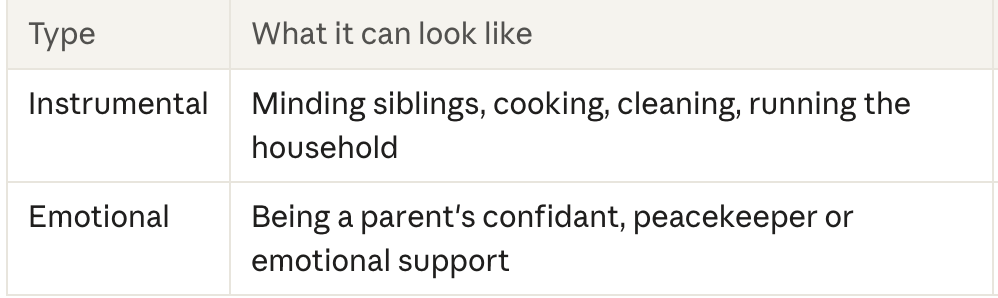
Table of type of parentification
It often falls to the eldest daughter, but not always. A younger child, a son or an only child can carry it too.
What the body remembers
A child who held a household together learned that staying alert kept things okay. That learning doesn't always switch off when you grow up. It can show up as:
Feeling responsible for everyone's mood in the room.
Finding it hard to ask for help, or to receive it.
Feeling restless or guilty when you rest.
Being "the dependable one" at work, at home and with friends.
The mind can understand all of this and the body can still brace. That's why a body-based practice can help: it lets you feel, not just know, that you're allowed to set something down.
Try it now: put it down (2 minutes)
Sit comfortably. Hold your hands in your lap, palms up, as if carrying something.
Notice what you're holding today: a family worry, a work task, someone else's feelings. Name it silently.
Feel the weight in your arms and shoulders.
Slowly turn your palms down and rest them on your thighs. Breathe out.
Say quietly: "I don't have to hold this right now." Notice what your body does.
Questions people ask
Is eldest daughter syndrome real? It's not a clinical diagnosis. It's a popular name for a recognisable pattern, which researchers study as parentification.
Does birth order affect personality? Large studies, including one of more than 20,000 adults published in 2015, found no meaningful effect of birth order on core personality traits.
What is parentification? When a child takes on adult responsibilities in the family, either practical (like caring for siblings) or emotional (like supporting a parent).
How do I stop being the responsible one? Start small: notice the urge to step in, pause and let one thing be held by someone else. A therapist can help if the roots run deep.
Come in
The Study is a one-on-one space for women who hold everyone else. Here, you're the one being held.
Written by Prishaniee, founder of the hOuse Of nO. Somatic guide, yoga teacher and Ayurveda practitioner.
